
Ingredient
K-Beauty Fragrance-Free vs Unscented Label Checklist
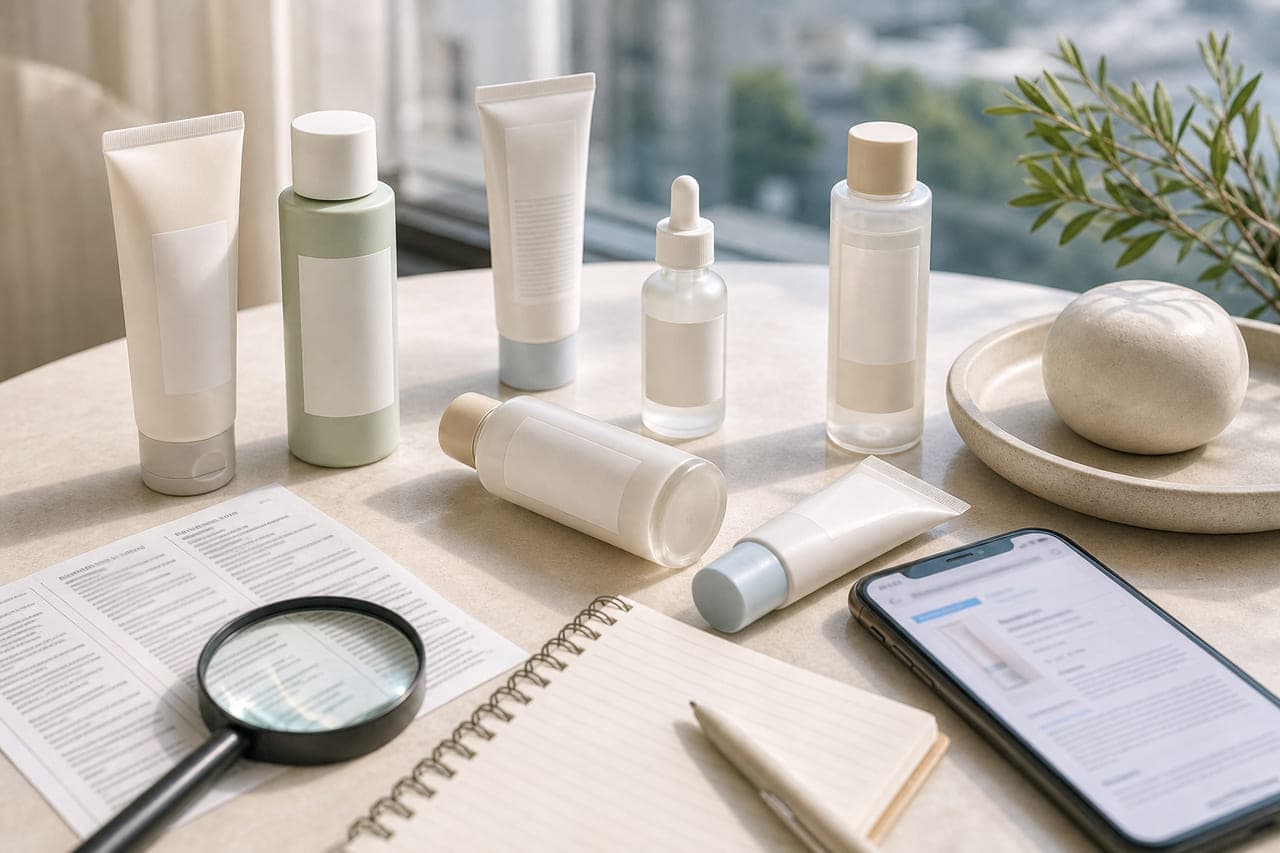
Compare fragrance-free, unscented, no-added-fragrance, parfum, essential-oil, and sensitive-style wording through the exact current formula and source explanation.
- Best for
- shoppers with a known fragrance preference who need to interpret Korean product wording without turning front-label terms into a universal safety claim
- Shopping context
- a label-reading decision where fragrance-free, unscented, no added fragrance, parfum, aroma, essential oil, botanical, and sensitive-style wording can be used differently
Updated 2026-07-22 · 9 min read
Answer first
What does fragrance free vs unscented mean in K-beauty?
Do not treat fragrance-free, unscented, and no-added-fragrance wording as interchangeable proof. Save the exact claim, read the complete current ingredient panel, and check whether the brand explains the term; front-label wording alone is not a universal safety or suitability guarantee.
Key decisions
- Define the exact job behind fragrance free vs unscented K-beauty before opening product, store, or provider options.
- Keep candidates inside the same job and compare current directions, format, version, and source evidence.
- Record one next action and leave unresolved price, stock, rating, availability, or service details for a current check.
On this page
- Answer in brief
- The short answer
- What should decide the answer
- A practical workflow
- How to compare alternatives
- Mistakes that weaken the decision
- Build a label evidence record
- Verification and next step
- Decision asset
- Decision table
- Common mistakes
- Source prompts
- Source boundaries
- Current checks
- Sources
- Related search answers
- Quick answers
The short answer
Do not treat fragrance-free and unscented as interchangeable proof; save the exact wording, review the complete ingredient panel, and check what the current brand source explicitly means In “K-Beauty Fragrance-Free vs Unscented Label Checklist,” the guide is designed for shoppers with a known fragrance preference who need to interpret korean product wording without turning front-label terms into a universal safety claim. The practical context is a label-reading decision where fragrance-free, unscented, no added fragrance, parfum, aroma, essential oil, botanical, and sensitive-style wording can be used differently. The goal is to leave with one clear next step, not a longer list of products, techniques, or places to research.
What should decide the answer
For “K-Beauty Fragrance-Free vs Unscented Label Checklist,” use these factors in order instead of starting with a viral product, a promotion, or a single featured ingredient. 1) Front-label fragrance-free, unscented, no-added-fragrance, essential-oil-free, hypoallergenic, and sensitive-style phrases should be preserved exactly. 2) The complete current ingredient panel may use fragrance, parfum, aroma, essential-oil, botanical, or other named materials that require careful source context. 3) A product with no obvious scent to one person is a personal observation and not proof of formula composition or universal comfort. 4) Known personal ingredient preferences can guide a check, while an unfamiliar term should not be classified as safe, unsafe, fragrant, or non-fragrant by guesswork. 5) Market version, reformulation, translated page, retailer summary, and old screenshot can conflict with the exact current physical label. If two options still look equal, prefer the one with clearer current directions and fewer unresolved questions.
A practical workflow
Work through “K-Beauty Fragrance-Free vs Unscented Label Checklist” as a sequence rather than collecting disconnected tips. 1) Write the known personal preference and the exact label term that needs verification without building a trend-based avoidance list. 2) Save the full product identity, market version, front-label phrase, complete formula source, directions, package, and date checked. 3) Search the current brand explanation for what its fragrance-free, unscented, no-added-fragrance, or related wording actually covers. 4) Keep personal scent observations separate from formula facts and mark any translation or source conflict unresolved. 5) Choose, compare later, or skip without extending one product's wording into a rule for every Korean cosmetic. Save the result in plain language so the next store visit, application attempt, or online check starts from a documented decision.
K-Beauty Fragrance-Free vs Unscented Label Checklist: decision checklist
Use this guide-specific checklist to turn the article into one documented next decision.
- Write the known personal preference and the exact label term that needs verification without building a trend-based avoidance list.
- Save the full product identity, market version, front-label phrase, complete formula source, directions, package, and date checked.
- Search the current brand explanation for what its fragrance-free, unscented, no-added-fragrance, or related wording actually covers.
- Keep personal scent observations separate from formula facts and mark any translation or source conflict unresolved.
- Choose, compare later, or skip without extending one product's wording into a rule for every Korean cosmetic.
How to compare alternatives
Within the decision covered by “K-Beauty Fragrance-Free vs Unscented Label Checklist,” keep alternatives inside the same job before comparing them. Reuse the decision factors—Front-label fragrance-free, unscented, no-added-fragrance, essential-oil-free, hypoallergenic, and sensitive-style phrases should be preserved exactly., The complete current ingredient panel may use fragrance, parfum, aroma, essential-oil, botanical, or other named materials that require careful source context., A product with no obvious scent to one person is a personal observation and not proof of formula composition or universal comfort., Known personal ingredient preferences can guide a check, while an unfamiliar term should not be classified as safe, unsafe, fragrant, or non-fragrant by guesswork.—and mark each field as confirmed, preference-dependent, or still unknown. A difference only matters when it changes comfort, application, routine fit, travel handling, or the ability to verify the current source.
Mistakes that weaken the decision
In “K-Beauty Fragrance-Free vs Unscented Label Checklist,” avoid shortcuts that make the page or purchase look more certain than the evidence allows. 1) Treating fragrance-free, unscented, no added fragrance, hypoallergenic, natural, or sensitive as equivalent certifications. 2) Assuming a product contains no fragrance-related material because one shopper cannot smell it. 3) Classifying every botanical or essential-oil term from a secondary list without checking the exact current formula and known preference. 4) Using a fragrance label to guarantee non-irritation, allergy safety, suitability, or medical outcomes. Treat an unanswered question as a reason to pause, not as permission to fill the gap with assumptions.
Build a label evidence record
For this label evidence record, the working answer to “K-Beauty Fragrance-Free vs Unscented Label Checklist” is: Do not treat fragrance-free and unscented as interchangeable proof; save the exact wording, review the complete ingredient panel, and check what the current brand source explicitly means This record is intended for shoppers with a known fragrance preference who need to interpret Korean product wording without turning front-label terms into a universal safety claim. In the context “a label-reading decision where fragrance-free, unscented, no added fragrance, parfum, aroma, essential oil, botanical, and sensitive-style wording can be used differently,” compare “Front-label fragrance-free, unscented, no-added-fragrance, essential-oil-free, hypoallergenic, and sensitive-style phrases should be preserved exactly” with “The complete current ingredient panel may use fragrance, parfum, aroma, essential-oil, botanical, or other named materials that require careful source context” and mark each field as confirmed, preference-dependent, or unresolved. Connect “A product with no obvious scent to one person is a personal observation and not proof of formula composition or universal comfort” to the action “Write the known personal preference and the exact label term that needs verification without building a trend-based avoidance list” only when the evidence supports both. Treat “Treating fragrance-free, unscented, no added fragrance, hypoallergenic, natural, or sensitive as equivalent certifications” as a stop condition while “Known personal ingredient preferences can guide a check, while an unfamiliar term should not be classified as safe, unsafe, fragrant, or non-fragrant by guesswork” remains unclear, and return to “Write the known personal preference and the exact label term that needs verification without building a trend-based avoidance list” before proceeding. Before closing the record, answer “What exact fragrance-free, unscented, no-added-fragrance, parfum, essential-oil, or sensitive-style wording appears” within the boundary “FDA allergen guidance notes that broad U.S. terms such as hypoallergenic, fragrance-free, and for sensitive skin are not a complete suitability answer” and attach the source that controls “Front-label fragrance-free, unscented, no-added-fragrance, essential-oil-free, hypoallergenic, and sensitive-style phrases should be preserved exactly” for shoppers with a known fragrance preference who need to interpret Korean product wording without turning front-label terms into a universal safety claim. For a useful handoff, pair “Does the current complete ingredient panel and brand explanation describe the same exact product version” with “Save the full product identity, market version, front-label phrase, complete formula source, directions, package, and date checked” while preserving “The complete current ingredient panel may use fragrance, parfum, aroma, essential-oil, botanical, or other named materials that require careful source context” for shoppers with a known fragrance preference who need to interpret Korean product wording without turning front-label terms into a universal safety claim, so the next reader can see why the option was used, compared later, or skipped. When the record is reopened, answer “Which ingredient preference is already known, and which concern is only an assumption from unfamiliar wording” before repeating “Assuming a product contains no fragrance-related material because one shopper cannot smell it,” and compare the new evidence with this page-specific scope: “Compare fragrance-free, unscented, no-added-fragrance, parfum, essential-oil, and sensitive-style wording through the exact current formula and source explanation.”
Verification and next step
Before acting on “K-Beauty Fragrance-Free vs Unscented Label Checklist,” run a final source pass. 1) What exact fragrance-free, unscented, no-added-fragrance, parfum, essential-oil, or sensitive-style wording appears? 2) Does the current complete ingredient panel and brand explanation describe the same exact product version? 3) Which ingredient preference is already known, and which concern is only an assumption from unfamiliar wording? 4) Is a scent note a personal observation or a verified statement about formula composition? 5) Which label, translation, reformulation, or source conflict should keep the product unresolved? The evidence boundary for this guide is: 1) FDA allergen guidance notes that broad U.S. terms such as hypoallergenic, fragrance-free, and for sensitive skin are not a complete suitability answer. 2) FDA labeling resources provide U.S. context and do not define every Korean or translated marketing term. 3) KBeautyTrip does not guarantee absence of a fragrance-related material, non-irritation, allergy safety, or individual suitability. 4) The exact current ingredient panel and direct brand explanation take precedence over a front-label phrase or scent observation. When a current label, provider page, retailer listing, or official travel source disagrees with saved notes, use the current source and update the notes. Record the source, access date, exact product or provider, and unresolved field so the decision can be audited later.
Common mistakes to avoid
- Treating fragrance-free, unscented, no added fragrance, hypoallergenic, natural, or sensitive as equivalent certifications.
- Assuming a product contains no fragrance-related material because one shopper cannot smell it.
- Classifying every botanical or essential-oil term from a secondary list without checking the exact current formula and known preference.
- Using a fragrance label to guarantee non-irritation, allergy safety, suitability, or medical outcomes.
Source verification prompts
- What exact fragrance-free, unscented, no-added-fragrance, parfum, essential-oil, or sensitive-style wording appears?
- Does the current complete ingredient panel and brand explanation describe the same exact product version?
- Which ingredient preference is already known, and which concern is only an assumption from unfamiliar wording?
- Is a scent note a personal observation or a verified statement about formula composition?
- Which label, translation, reformulation, or source conflict should keep the product unresolved?
Source boundaries
- FDA allergen guidance notes that broad U.S. terms such as hypoallergenic, fragrance-free, and for sensitive skin are not a complete suitability answer.
- FDA labeling resources provide U.S. context and do not define every Korean or translated marketing term.
- KBeautyTrip does not guarantee absence of a fragrance-related material, non-irritation, allergy safety, or individual suitability.
- The exact current ingredient panel and direct brand explanation take precedence over a front-label phrase or scent observation.
Verify current details
- Verify the current first-party, official, government, label, or retailer source that controls fragrance free vs unscented K-beauty.
- Match the exact product, version, directions, seller or provider, date, and changing terms before acting.
Fragrance-free versus unscented label check
Separate exact on-pack wording, complete ingredient list, official explanation, sensory observation, and medical assumptions.
| Research stage | Decision action | Evidence boundary |
|---|---|---|
| Exact front-label wording | Record fragrance-free, unscented, no added fragrance, perfume-free, or other precise wording on the exact current product. | These phrases are not interchangeable guarantees and should not be expanded beyond the responsible source's exact claim. |
| Complete ingredient list | Read the entire current list and preserve fragrance, parfum, aroma, essential-oil, extract, masking, and other exact terms as written. | A list scan cannot diagnose allergy, confirm every scent source, or infer concentration, purpose, or individual tolerance. |
| Product and sensory context | Record rinse or leave-on format, application area, directions, official explanation, and any personal odor observation separately. | No noticeable smell does not prove fragrance-free, and noticeable odor does not prove added perfume or unsafe use. |
| Safe decision | Choose a better-documented candidate, ask the responsible source, patch test as appropriate, compare later, or skip. | The checklist cannot certify hypoallergenicity, allergy safety, non-irritation, treatment, or suitability for every person. |
Fragrance-related shopping language is not allergy diagnosis or safety certification. Verify the exact current product and seek qualified guidance for a medical concern or reaction.
Continue this research path
Evidence trail
Sources
- U.S. FDA allergens in cosmetics guidance
government
- U.S. FDA cosmetics labeling resources
government
Continue the research path
Ingredients
Browse ingredient guides
Continue with label meaning, format maps, comparisons, and routine overlap checks.
Scorecard
Score the shortlist
Compare role, texture, label details, seller checks, travel fit, and final decision.
Shortlist
Save a smaller shortlist
Keep product candidates and verification notes in this browser while comparing options.
Retailer check
Verify the retailer page
Use seller, label, version, shipping, and return checks before relying on a retailer listing.
Routine
Check routine fit
Map skin type, category, and routine role before adding another product step.
Quick answers
What does fragrance free vs unscented mean in K-beauty?
Do not treat fragrance-free, unscented, and no-added-fragrance wording as interchangeable proof. Save the exact claim, read the complete current ingredient panel, and check whether the brand explains the term; front-label wording alone is not a universal safety or suitability guarantee.
What is the first decision for fragrance free vs unscented K-beauty?
Write the exact job, constraint, and existing alternative first. This keeps the research question smaller than a general product, store, or trend search.
Which details must be verified for fragrance free vs unscented K-beauty?
Verify the exact identity, current directions, version, source date, and the seller, provider, travel, or checkout details that can change.
Does fragrance free vs unscented K-beauty provide a universal winner or live commercial data?
No. The guide provides an educational decision framework and does not invent a universal winner, live price, stock, rating, review count, promotion, or availability.
What is the quickest way to use K-Beauty Fragrance-Free vs Unscented Label Checklist?
Do not treat fragrance-free and unscented as interchangeable proof; save the exact wording, review the complete ingredient panel, and check what the current brand source explicitly means Start with the four decision factors, complete the workflow once, and keep unresolved source details in a compare-later note.
Does K-Beauty Fragrance-Free vs Unscented Label Checklist provide live prices, rankings, or availability?
No. It does not infer prices, ratings, review counts, stock, promotions, certifications, or availability. Check current official and retailer sources before acting.
Related product profiles
Black Rice Moisture Airyfit Daily Sunscreen
Haruharu WonderVerify the current Sunscreen identity, label, and source status before deciding.
Black Rice Extract + Niacinamide

Water Bank Blue Hyaluronic Intensive Moisturizer
LaneigeVerify the current Moisturizer identity, label, and source status before deciding.
Blue Hyaluronic Acid + Squalane

Teatree Essential Mask Calming Moisture
MedihealVerify the current Mask identity, label, and source status before deciding.
Tea Tree Extract + Panthenol
1025 Dokdo Toner
Round LabVerify the current Toner identity, label, and source status before deciding.
Deep Sea Water + Panthenol