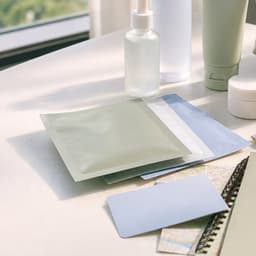
MaskEditorially checked
Teatree Essential Mask Calming Moisture
MedihealVerify the current Mask identity, label, and source status before deciding.
Tea Tree Extract + Panthenol

Routine step guide
A routine-step hub for occasional sheet mask and mask-format shopping decisions.
Answer first
Mask placement depends on the exact format: a rinse-off mask, sheet mask, sleeping mask, and pad do not share one automatic routine position. Read the current label for contact time, rinsing, leave-on use, and frequency, then check whether the mask duplicates an everyday toner, serum, or moisturizer job.
Decision asset
Use masks as optional routine extras, souvenirs, or travel treats, not as requirements for a complete routine.
Follow the exact label for contact time, frequency, and whether the format is rinse-off or leave-on. Mask naming and packaging do not prove that an occasional product is necessary or suitable for every routine.
Verify the current Mask identity, label, and source status before deciding.
Tea Tree Extract + Panthenol
Verify the current Mask identity, label, and source status before deciding.
Squalane + Probiotic Ferment
Verify the current Mask identity, label, and source status before deciding.
Madecassoside + Centella Asiatica
Use these comparisons when two products could fill the same routine step or when a neighboring step might be the better gap.
Compare an overnight mask profile with a single-use sheet mask profile for travel and gift decisions.
Compare productsCompare two sheet mask profiles by label cues, gift fit, and occasional-care role.
Compare productsCompare an optional sheet mask profile with a watery toner profile before choosing a travel or daily routine purchase.
Compare productsCompare a toner pad format with an occasional sheet mask format before buying Mediheal products.
Compare productsShowing 4 of 4
Shopping
Compare Mediheal single-use sheet masks and repeat-use toner pads by routine role, exact variant, directions, count, storage, and duplicate-step risk.
Related guide
Comparison
Place one toner pad or sheet mask format on a weekly routine map by using exact current directions, contact method, storage, package, and overlap checks.
Related guide
Shopping
A tourist-friendly sheet mask buying guide focused on format, luggage space, ingredient checks, and source-checked mask profiles.
Related guide
Travel
A practical Myeongdong shopping plan for tourists comparing Korean skincare, masks, sunscreen, and souvenirs.
Related guide
Scorecard
Compare role, texture, label details, seller checks, travel fit, and final decision.
Routine
Map skin type, category, and routine role before adding another product step.
Verification
Check product identity, label details, seller context, shipping, returns, and current retailer claims.
Manual beta
Use the manual beta when a free checklist is not enough for a routine, Seoul trip, or checkout decision.