
Comparison
Korean Toner vs Essence: What Is the Difference?
A practical comparison of toner and essence steps in K-beauty routines.
Updated 2026-07-22 · 7 min read
Answer first
What is the difference between Korean toner and essence?
A toner is usually a light first leave-on step, while an essence is often a more cushioned layer placed after toner and before serum or moisturizer. Product labels overlap, so texture and current directions matter more than the category name alone.
Key decisions
- Choose toner when a light first leave-on layer fills the routine gap.
- Choose essence when a more cushioned middle layer has a distinct role.
- Skip one or both when they duplicate the hydration or active-style job of another step.
On this page
- Answer in brief
- Toner is usually the first leave-on layer
- Essence often feels more cushioned
- You do not need both
- Decision checkpoint
- Compare the routine job before the category name
- Place the product using current directions
- Check overlap with serum and moisturizer
- Use a one-product trial decision
- Compare application method and package design
- Decide whether either step belongs in the starter routine
- Decision asset
- Source prompts
- Source boundaries
- Current checks
- Sources
- Related search answers
- Quick answers
Toner is usually the first leave-on layer
Modern Korean toners are often light first leave-on layers, though formulas vary widely. Check whether the current label presents the product as a simple hydration toner, a milky toner, or a more active-positioned step before placing it in the routine.
Essence often feels more cushioned
Essences can be watery or viscous and usually sit between toner and serum or cream. Use the brand or retailer source page to verify texture clues, use directions, and whether the essence overlaps with a serum you already plan to use.
You do not need both
A simple routine can use either one, both, or neither depending on skin feel, budget, and the rest of the routine. If the source details are unclear, put the product in compare-later instead of adding another leave-on layer.
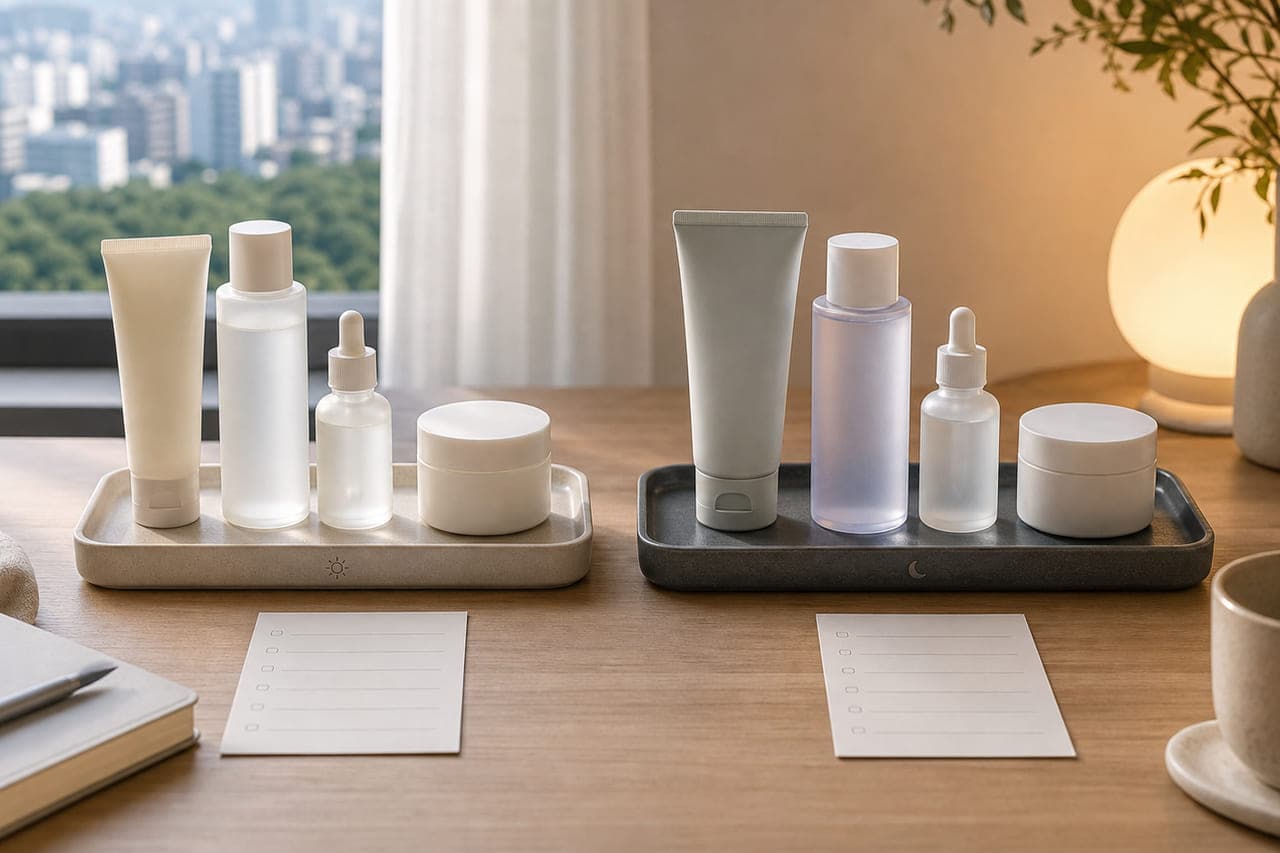
Korean toner vs essence decision matrix
Compare the exact products by routine job and directions before assuming the category names require two separate leave-on steps.
| Research stage | Decision action | Evidence boundary |
|---|---|---|
| Routine job | Write one sentence describing what each exact product would add, then compare that job with the serum, emulsion, moisturizer, mist, or pad already used. | Different category names do not prove different jobs, and a longer routine is not automatically more complete. |
| Directions and placement | Check application method, rinse or leave-on use, frequency, warnings, and any order instruction on the current product label. | A generic toner-before-essence rule should not override directions for the exact product or justify using incompatible layers. |
| Texture and layer stack | Compare spread, finish, amount, and the complete sequence under moisturizer, sunscreen, or makeup while keeping surrounding products stable. | Texture observations are routine-specific and do not establish universal hydration, comfort, absorption, or individual fit. |
| One-product decision | Choose one candidate for the missing job, keep the other on a compare-later list, and record the current source and reason for the choice. | The comparison can end with toner, essence, or neither; it should not force a purchase or a fixed Korean skincare step count. |
Toner and essence names are not standardized performance levels. Current product directions and the complete routine control placement; either option, one option, or neither can be a reasonable outcome.
Decision checkpoint
Choose toner when you need a light first layer, choose essence when you want a more cushioned middle layer, and skip both when cleanser, moisturizer, and sunscreen already make the routine understandable.
Compare the routine job before the category name
Toner and essence are not universally separated by one rule. Product names can reflect brand language, texture, marketing, or routine tradition, so start with the exact directions and the job the formula is meant to fill. If both candidates are lightweight leave-on hydration steps, the practical question is whether either adds a distinct role. If one is positioned for a different use pattern, record that difference without assuming the category alone proves it. Choose the product that makes the routine clearer, not the label that sounds more advanced.
Place the product using current directions
Generic advice often places toner before essence, but the current product directions are the controlling source. Check whether the product is applied by hand or pad, whether it is intended for a particular frequency, and what warnings or sequencing notes appear on the exact version. When directions do not resolve the order, arrange compatible leave-on products from lighter to more substantial texture and avoid adding both at once. The purpose of order is consistent application, not compliance with a fixed number of Korean skincare steps.
Check overlap with serum and moisturizer
A toner or essence decision should include the rest of the leave-on routine. A hydrating serum or light emulsion may already fill the same practical job, while a richer moisturizer can change whether another layer feels useful. Map every product by job, texture, and required direction. If a new toner or essence creates three similar hydration layers, compare which single layer is easiest to apply and verify. This prevents a narrow category comparison from quietly expanding the entire routine.
Use a one-product trial decision
When both categories remain plausible, select one candidate for the documented routine role and keep the other on a compare-later list. Save the exact label source, product version, application notes, and the reason it was chosen. Introduce it without changing several surrounding products at the same time. The result to observe is whether the routine becomes easier to follow and remains comfortable, not whether the category name delivers a promised transformation. Stop and seek appropriate guidance if a concerning reaction occurs.
Compare application method and package design
A toner poured into the hand, dispensed through a pump, sprayed as a mist, or applied with a pad creates different handling questions even when the liquid texture appears similar. An essence may use a dropper, pump, or bottle opening that changes amount control and travel practicality. Check the exact directions before choosing cotton, hands, or another tool, and do not invent an application method from the category name. Compare closure, leakage risk, package size, dispensing control, and the effort required to use the product consistently. These differences can decide between two overlapping leave-on layers without claiming one category is inherently more effective.
Decide whether either step belongs in the starter routine
A toner-versus-essence comparison can correctly end with neither product. If cleanser, moisturizer, and morning sunscreen already form a clear routine, an extra leave-on layer should answer a documented texture, application, or routine-role question. Write the proposed job in one sentence and compare it with every serum, mist, emulsion, and moisturizer already used. If the job is duplicated or the current directions complicate the routine, postpone both options. This keeps category curiosity separate from a purchase requirement and gives a beginner a stable base from which one optional layer can later be evaluated.
Source verification prompts
- Does the current source show the exact product name, size, package version, and intended cosmetic role?
- Do the current ingredient list, warnings, and directions match the version being researched?
- Are price, stock, promotion, seller, shipping, and return details being treated as live rather than editorial facts?
- Is a texture or format description being kept separate from a guaranteed result?
- Has the source URL and date checked been saved before a purchase or recommendation decision?
Source boundaries
- This guide provides an editorial decision framework, not a live product ranking or retailer feed.
- A highlighted ingredient, format, or texture does not establish suitability or a guaranteed outcome.
- Current brand, label, and retailer sources override saved wording when product identity or directions change.
- Prices, stock, ratings, review counts, promotions, certifications, sellers, shipping, and returns are not inferred.
Verify current details
- Verify the current directions because some products use toner, essence, treatment, or multi-use wording differently.
- Compare the whole formula and texture rather than assuming one category is always lighter or stronger.
Continue this research path
Evidence trail
Sources
- U.S. FDA cosmetics labeling resources
government
- Korea MFDS cosmetic regulatory framework
government
Continue the research path
Comparisons
Browse decision comparisons
Compare skincare, makeup, hair, body, and experience formats by job.
Scorecard
Score the shortlist
Compare role, texture, label details, seller checks, travel fit, and final decision.
Shortlist
Save a smaller shortlist
Keep product candidates and verification notes in this browser while comparing options.
Retailer check
Verify the retailer page
Use seller, label, version, shipping, and return checks before relying on a retailer listing.
Routine
Check routine fit
Map skin type, category, and routine role before adding another product step.
Quick answers
What is the difference between Korean toner and essence?
A toner is usually a light first leave-on step, while an essence is often a more cushioned layer placed after toner and before serum or moisturizer. Product labels overlap, so texture and current directions matter more than the category name alone.
Does toner go before essence?
Usually, a lighter toner goes before a more cushioned essence, but the current product directions should control the order.
Do you need both toner and essence?
No. A routine can use either one, both, or neither. Keep a step only when it has a clear role that is not already covered.
Is essence the same as serum?
Not always. Category wording overlaps across brands, so compare texture, directions, formula context, and routine role instead of relying only on the name.
Related product profiles
Heartleaf 77 Soothing Toner
AnuaVerify the current Toner identity, label, and source status before deciding.
Heartleaf Extract + Panthenol
Advanced Snail 96 Mucin Power Essence
COSRXVerify the current Essence identity, label, and source status before deciding.
Snail Secretion Filtrate + Sodium Hyaluronate