
Shopping
Korean Sunscreen Texture Guide for Seoul and Online Shopping
A texture-first Korean sunscreen guide for comparing watery gel, lotion, cream, and velvet-feel profiles before buying.
Updated 2026-07-22 · 11 min read
Answer first
How do Korean sunscreen textures differ?
Fluid and serum-like sunscreens often emphasize light spread, gels can feel fresh, lotions sit between fluid and cream, and creams may feel more cushioned. These are comparison lanes, not guarantees of finish, protection experience, or personal fit.
Key decisions
- Compare texture over the moisturizer and makeup layers used in the real routine.
- Separate spread, dry-down, shine, pilling, and eye-area comfort into different observations.
- Match the exact regional product version before using reviews or descriptions as evidence.
On this page
- Answer in brief
- Start with texture before brand
- Compare morning layers
- Check the current label
- Use Seoul testers carefully
- Avoid backup buying too early
- Save a reorder record
- Distinguish gel, fluid, lotion, and cream formats
- Treat sticks as a separate use question
- Run a full-layer texture check
- Verify protection and market version separately
- Write sensory notes without turning them into ratings
- Choose packaging for the actual application context
- Decision asset
- Source prompts
- Source boundaries
- Current checks
- Sources
- Related search answers
- Quick answers
Start with texture before brand
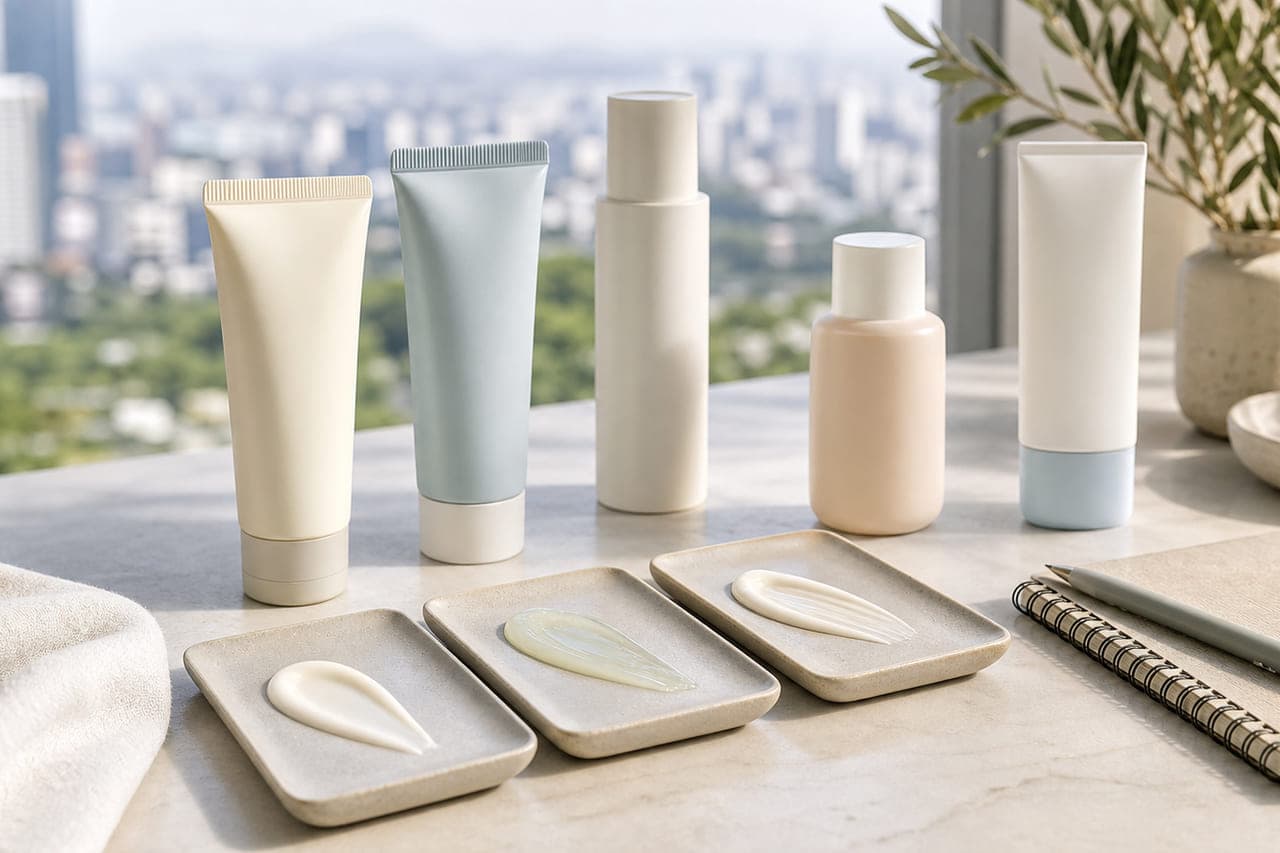
Sunscreen is easiest to compare when texture comes first. Separate watery gel, lotion, cream, and velvet-feel profiles before deciding which brand page or retailer listing deserves more time.
Compare morning layers
A sunscreen can feel different over a watery serum, a gel cream, or a richer moisturizer. Write down what sits underneath it before judging the texture lane.
Check the current label
Sunscreen labels and market versions can change. Verify the current package, use directions, regional labeling, and seller details before checkout.
Korean sunscreen texture cue matrix
Use format words to organize a small comparison, then test the complete morning layer stack without treating a name as a performance promise.
| Research stage | Decision action | Evidence boundary |
|---|---|---|
| Fluid or watery cue | Compare flow, spread, package control, settling, and whether the format is practical with the moisturizer and makeup already used. | A fluid name does not guarantee a matte finish, low shine, light feel, complete coverage, or oily-skin suitability. |
| Gel or serum-like cue | Compare application amount, film formation, stickiness, pilling, and interaction with the same surrounding morning products. | Gel and serum-like are marketing or format cues; they do not prove filter type, hydration, protection, wear, or comfort. |
| Lotion or airy-cream cue | Compare body, slip, finish, drying behavior, and whether simplifying a separate moisturizer changes the total layer stack. | Airy, light, or lotion wording is not a universal measure and should not replace the exact label or a controlled routine comparison. |
| Cream cue | Compare richness, spread, finish, makeup interaction, and comfort in the real routine while keeping other products stable. | Cream does not automatically mean heavy, moisturizing, dry-skin only, or better protection; the exact formula and individual routine matter. |
Texture labels are not standardized measurements. Verify the exact current SPF, UVA information, market version, directions, warnings, and water-resistance wording on the product and official source.
Use Seoul testers carefully
A store tester can help with first texture impressions, but it does not replace current label checks or a full routine test.
Avoid backup buying too early
Buy backups only after the sunscreen has a real place in the morning routine. A nice store impression should not be the only reason to buy multiples.
Save a reorder record
Record exact product name, size, package version, and where you checked the current details. This makes online follow-up easier after a trip.
Distinguish gel, fluid, lotion, and cream formats
Texture names are useful starting points, not standardized performance grades. A gel or fluid name may suggest quicker spread or a lighter-feeling format, while lotion and cream names may suggest more body, but exact formulas vary. Read the current description, directions, package, and full ingredient source rather than transferring expectations from another product with the same format word. Build the shortlist around the application experience being researched, then test the exact product in the complete morning routine before drawing a personal conclusion.
Treat sticks as a separate use question
A sun stick changes handling and application mechanics, so compare it with lotion formats by job rather than convenience alone. Check the current directions for coverage and reapplication, the shape and size of the applicator, hygiene and storage considerations, and how it interacts with makeup or an existing sunscreen layer. Portability can be valuable, but a compact package does not itself establish complete or even application. Keep first application and later touch-up research as separate decisions.
Run a full-layer texture check
Texture should be assessed with the products that actually sit underneath and above it. Record the cleanser residue, leave-on layers, moisturizer, sunscreen, and makeup sequence. If pilling, movement, or heaviness appears, simplify one earlier layer before rejecting an entire sunscreen format. Change one variable at a time and follow every current product direction. This does not produce a universal texture ranking, but it creates a repeatable way to understand why the same sunscreen can behave differently in two morning routines.
Verify protection and market version separately
A texture comparison cannot verify sun-protection performance. Match the exact product name, package, market version, and current SPF and UVA information on an authoritative product or regulatory source. Do not reuse a claim from a retailer snippet, old package photo, or similarly named version. Also check any current water-resistance statement and directions on the exact label when that matters to the planned use. When versions conflict, place the product on hold until identity and claims are clear.
Write sensory notes without turning them into ratings
For each sunscreen texture, record spread, visible cast on the person testing it, surface finish, tack, drying behavior, eye-area handling only when appropriately tested, makeup interaction, and comfort as separate observations. Note the complete routine and environment because these variables can change the result. Avoid compressing the record into a star score or a universal label such as best for everyone. A useful note says what was observed under documented conditions and what remains unknown. Protection, water resistance, and application requirements stay tied to the exact current label rather than being inferred from the sensory experience.
Choose packaging for the actual application context
Pump, tube, bottle, cushion, and stick formats change portability, dispensing control, leakage risk, hygiene handling, and the ease of following application directions. Compare package mechanics separately from the sunscreen texture inside. A compact format can help with carrying or touch-up planning but does not prove complete coverage, while a larger package may be easier at home but inconvenient for a trip. Check the current size, closure, applicator, directions, and travel rules on the exact version. The package decision should support correct use without replacing the protection and formula checks.
Source verification prompts
- Does the current source show the exact product name, size, package version, and intended cosmetic role?
- Do the current ingredient list, warnings, and directions match the version being researched?
- Are price, stock, promotion, seller, shipping, and return details being treated as live rather than editorial facts?
- Is a texture or format description being kept separate from a guaranteed result?
- Has the source URL and date checked been saved before a purchase or recommendation decision?
Source boundaries
- This guide provides an editorial decision framework, not a live product ranking or retailer feed.
- A highlighted ingredient, format, or texture does not establish suitability or a guaranteed outcome.
- Current brand, label, and retailer sources override saved wording when product identity or directions change.
- Prices, stock, ratings, review counts, promotions, certifications, sellers, shipping, and returns are not inferred.
Verify current details
- Check current directions, regional version, package, and formula on the official or retailer source page.
- Do not convert texture wording into a guaranteed matte, invisible, non-irritating, or makeup-safe claim.
Continue this research path
Evidence trail
Sources
- Korea MFDS functional cosmetics overview
government
- U.S. FDA cosmetics labeling resources
government
Continue the research path
Shopping
Browse shopping guides
Continue with product identity, seller, version, and reorder checks.
Scorecard
Score the shortlist
Compare role, texture, label details, seller checks, travel fit, and final decision.
Shortlist
Save a smaller shortlist
Keep product candidates and verification notes in this browser while comparing options.
Retailer check
Verify the retailer page
Use seller, label, version, shipping, and return checks before relying on a retailer listing.
Routine
Check routine fit
Map skin type, category, and routine role before adding another product step.
Quick answers
How do Korean sunscreen textures differ?
Fluid and serum-like sunscreens often emphasize light spread, gels can feel fresh, lotions sit between fluid and cream, and creams may feel more cushioned. These are comparison lanes, not guarantees of finish, protection experience, or personal fit.
Which Korean sunscreen texture feels lightest?
Fluid, serum-like, and some gel formats are useful light-texture candidates, but the complete formula and surrounding routine determine the final feel.
Is cream sunscreen only for dry skin?
No. Cream describes a format, not a fixed skin-type rule. Compare the actual texture, moisturizer underneath, weather, and personal preference.
Why does sunscreen pill under makeup?
Layer quantity, application timing, incompatible textures, rubbing, and the products underneath can all contribute. Test the full routine rather than blaming one label category.
Related product profiles
Hyaluronic Acid Watery Sun Gel
IsntreeVerify the current Sunscreen identity, label, and source status before deciding.
Hyaluronic Acid + Niacinamide
Birch Moisturizing Sunscreen UVLock SPF45+ Broad Spectrum
Round LabVerify the current Sunscreen identity, label, and source status before deciding.
Birch Juice + Niacinamide
Relief Sun Rice + Probiotics SPF50+ PA++++
Beauty of JoseonVerify the current Sunscreen identity, label, and source status before deciding.
Rice Extract + Grain Fermented Extracts
Black Rice Moisture Airyfit Daily Sunscreen
Haruharu WonderVerify the current Sunscreen identity, label, and source status before deciding.
Black Rice Extract + Niacinamide