
Shopping
How to Choose a Korean Sunscreen for Oily Skin
Texture-first shopping guidance for oily skin routines, using source-checked sunscreen profiles instead of fake rankings.
Updated 2026-07-22 · 8 min read
Answer first
How should you choose a Korean sunscreen for an oily-skin routine?
Start with texture and layering compatibility rather than a universal best-product claim. Fluid, gel, serum-like, or airy cream formats may be easier candidates to compare, but no texture name guarantees a matte finish or individual comfort.
Key decisions
- Compare sunscreen over the moisturizer and makeup steps you actually use.
- Separate finish words such as dewy, natural, velvet, or matte from verified wear in your own routine.
- Check the current regional product version because names, filters, packages, and directions can differ.
On this page
- Answer in brief
- Prioritize texture
- Compare source-checked sunscreen profiles
- Compare the full routine
- Translate texture words into testable filters
- Audit the layers underneath
- Compare application and reapplication needs
- Keep protection claims tied to the current label
- Separate surface finish from routine comfort
- Build a controlled two-sunscreen comparison
- Decision asset
- Source prompts
- Source boundaries
- Current checks
- Sources
- Related search answers
- Quick answers
Prioritize texture
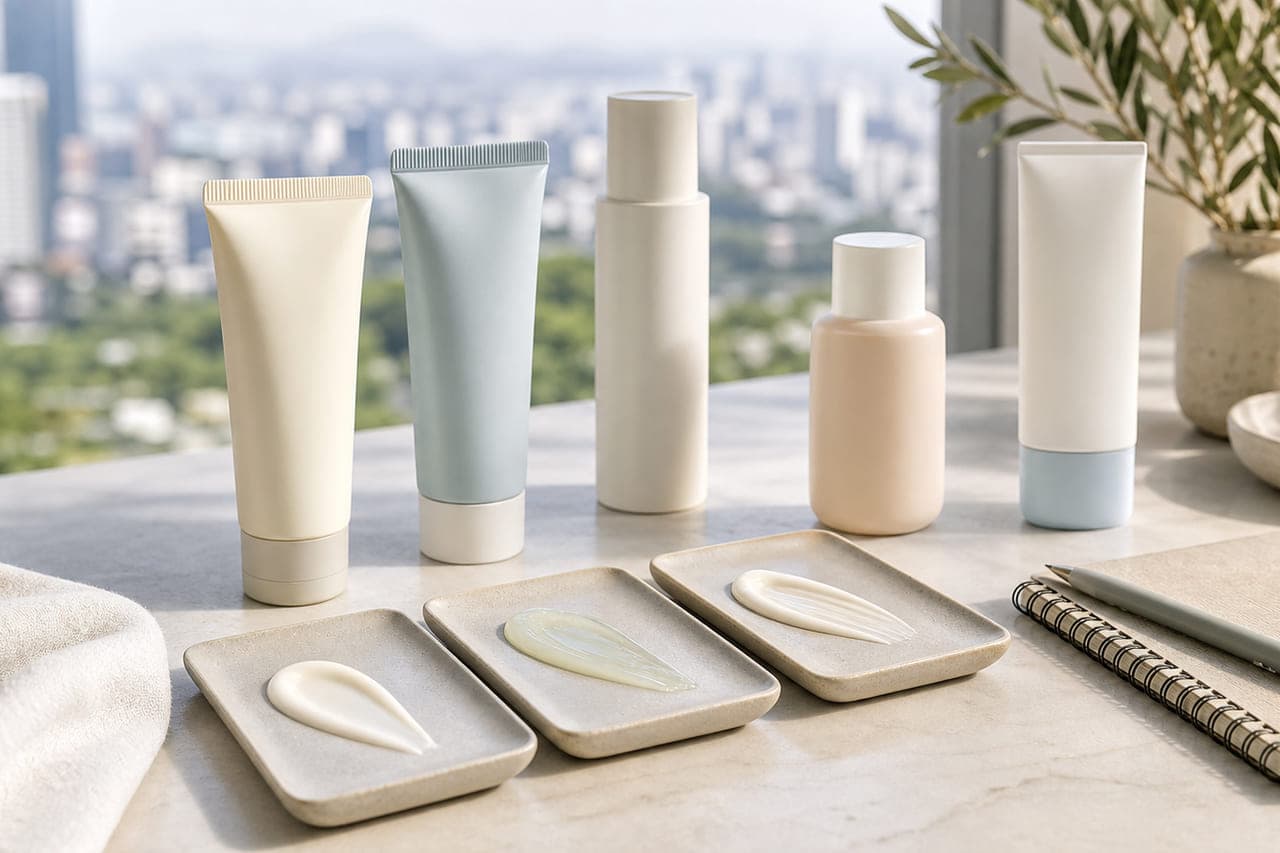
People with oily skin often prefer watery gel, fluid, or airy cream textures. Use this as a texture filter, not a promise that a sunscreen will stay matte or suit every oily routine.
Compare source-checked sunscreen profiles
Start with Haruharu for a velvet-feel sunscreen profile, Isntree for a watery sun gel profile, and Round Lab or Beauty of Joseon when you want to compare softer cream-style sunscreen textures.
Compare the full routine
A sunscreen can feel different depending on the moisturizer, serum, and makeup layered underneath. If your moisturizer is rich, a lighter sunscreen texture may be easier to test first.
Oily-skin sunscreen routine test matrix
Compare an exact sunscreen inside the morning routine it must serve. Record each context separately instead of turning a texture word into a universal ranking.
| Routine context | What to compare | Evidence boundary |
|---|---|---|
| Lean morning, no makeup | Spread, visible finish, touch after settling, comfort, and whether the sunscreen already makes a separate moisturizer unnecessary for this routine. | Keep cleansing and optional leave-on layers stable. One comfortable observation does not prove universal oily-skin fit or oil control. |
| Moisturizer underneath | The combined richness, movement during application, pilling, and whether simplifying the moisturizer changes the complete layer stack. | Do not assign every layering problem to the sunscreen. Follow both current labels and change only one surrounding variable at a time. |
| Makeup over sunscreen | How the same base, amount, tool, and application timing interact with the sunscreen's finish and the movement of makeup layers. | A single makeup test is routine-specific, not a wear-time guarantee. Keep lighting, base products, and tools consistent when comparing candidates. |
| Later reapplication | Current reapplication directions, package handling, application method, cleanliness, and interaction with the existing sunscreen or makeup layer. | Portability or a convenient format does not establish complete coverage. The exact current product directions control application and reapplication. |
This matrix organizes cosmetic texture and layering observations. It does not independently test sun protection, diagnose a skin condition, or guarantee finish, wear, comfort, or individual suitability.
Translate texture words into testable filters
Terms such as gel, fluid, essence, serum, lotion, cream, airy, and velvet can narrow a shortlist, but they do not guarantee oil control, a matte finish, or comfort for every person. Use the words to predict application style, then verify the exact formula, directions, and current product version. A fluid may spread quickly, while a cream may feel more substantial, but marketing names are not standardized texture measurements. Keep two or three format candidates and compare them under the same routine conditions rather than treating a single texture word as the winner.
Audit the layers underneath
A sunscreen decision can change when the moisturizer, serum, and makeup underneath change. Record whether the morning routine already contains a rich cream, several leave-on layers, or a base product that tends to move during application. If the full stack feels heavy, the useful question may be which earlier layer can be simplified rather than which sunscreen is universally best for oily skin. Test the complete morning sequence, follow each label, and change one variable at a time. This makes texture notes more useful and avoids assigning every layering problem to the sunscreen alone.
Compare application and reapplication needs
The first application and later reapplication are separate shopping questions. A format that works well on bare skin may interact differently with makeup or an existing sunscreen layer. Check the current directions for amount, application timing, and reapplication rather than relying on a general format assumption. If portability matters, compare package size, closure, leakage risk, and whether the product can be handled cleanly during the day. A stick can be convenient to carry, but convenience does not replace the need to follow the product's directions or establish complete coverage.
Keep protection claims tied to the current label
Verify the exact SPF and UVA information on the product and current official source for the market version being considered. Do not transfer a claim from an older package, another country, a retailer snippet, or a similarly named product. Also record the full product name and size so a later purchase can be matched correctly. This guide uses texture to organize research; it does not independently test protection, wear, water resistance, oil control, or finish. When label information is unclear or versions conflict, move the item to compare later instead of filling the gap with an assumption.
Separate surface finish from routine comfort
Matte, velvet, natural, radiant, and dewy are useful finish words, but they describe only one part of the sunscreen decision. A product can look less shiny yet still feel substantial, or look luminous while remaining easy to layer in a particular routine. Record visible finish, touch, spread, drying behavior, and makeup interaction as separate observations. Use the same moisturizer, application order, and makeup base when comparing candidates so the notes describe the sunscreen rather than several changing variables. Do not convert a personal wear note into a universal oily-skin claim, and keep current protection information tied to the exact label.
Build a controlled two-sunscreen comparison
Choose no more than two candidates that meet the same protection and market-version checks, then compare them in the routine that will actually be used. Create fields for exact name, texture, package, directions, layers underneath, finish without makeup, finish with makeup, portability, and unresolved questions. Test on separate comparable occasions rather than placing different products on different parts of the face and assuming the conditions are identical. The output is a routine-specific preference record, not a ranking. If neither candidate layers clearly or the identity evidence conflicts, keep both out of the purchase-ready decision.
Source verification prompts
- Does the current source show the exact product name, size, package version, and intended cosmetic role?
- Do the current ingredient list, warnings, and directions match the version being researched?
- Are price, stock, promotion, seller, shipping, and return details being treated as live rather than editorial facts?
- Is a texture or format description being kept separate from a guaranteed result?
- Has the source URL and date checked been saved before a purchase or recommendation decision?
Source boundaries
- This guide provides an editorial decision framework, not a live product ranking or retailer feed.
- A highlighted ingredient, format, or texture does not establish suitability or a guaranteed outcome.
- Current brand, label, and retailer sources override saved wording when product identity or directions change.
- Prices, stock, ratings, review counts, promotions, certifications, sellers, shipping, and returns are not inferred.
Verify current details
- Verify the exact sunscreen name, regional version, directions, and current ingredient panel.
- Do not treat popularity, rankings, review counts, or retailer badges as proof of oily-skin fit.
Continue this research path
Evidence trail
Sources
- Korea MFDS functional cosmetics overview
government
- U.S. FDA cosmetics labeling resources
government
Continue the research path
Shopping
Browse shopping guides
Continue with product identity, seller, version, and reorder checks.
Scorecard
Score the shortlist
Compare role, texture, label details, seller checks, travel fit, and final decision.
Shortlist
Save a smaller shortlist
Keep product candidates and verification notes in this browser while comparing options.
Retailer check
Verify the retailer page
Use seller, label, version, shipping, and return checks before relying on a retailer listing.
Routine
Check routine fit
Map skin type, category, and routine role before adding another product step.
Quick answers
How should you choose a Korean sunscreen for an oily-skin routine?
Start with texture and layering compatibility rather than a universal best-product claim. Fluid, gel, serum-like, or airy cream formats may be easier candidates to compare, but no texture name guarantees a matte finish or individual comfort.
Is gel sunscreen always best for oily skin?
No. Gel is a useful texture category, but the complete formula, moisturizer underneath, weather, and makeup layers all affect the final feel.
Should an oily-skin routine skip moisturizer under sunscreen?
Not automatically. Compare the combined texture of moisturizer and sunscreen, then simplify only when current directions and personal comfort support that choice.
Can a Korean sunscreen formula differ by market?
Yes, product names, packages, formulas, directions, and regulatory positioning can vary by region. Match the exact current version before comparing.
Related product profiles
Black Rice Moisture Airyfit Daily Sunscreen
Haruharu WonderVerify the current Sunscreen identity, label, and source status before deciding.
Black Rice Extract + Niacinamide
Hyaluronic Acid Watery Sun Gel
IsntreeVerify the current Sunscreen identity, label, and source status before deciding.
Hyaluronic Acid + Niacinamide
Birch Moisturizing Sunscreen UVLock SPF45+ Broad Spectrum
Round LabVerify the current Sunscreen identity, label, and source status before deciding.
Birch Juice + Niacinamide
Relief Sun Rice + Probiotics SPF50+ PA++++
Beauty of JoseonVerify the current Sunscreen identity, label, and source status before deciding.
Rice Extract + Grain Fermented Extracts