
Travel
Olive Young Moisturizer Aisle Checklist
A moisturizer aisle checklist for comparing gel cream, cream, richer textures, fragrance notes, and final-step routine fit.
Updated 2026-07-22 · 7 min read
Answer first
How should you narrow moisturizer choices at Olive Young?
Decide whether the routine needs a gel cream, lotion, regular cream, or richer final layer before comparing brands. Use testers only for limited texture observations, then verify the exact product label, package, directions, fragrance context, and current version before checkout.
Key decisions
- Name the missing final-step texture before entering the aisle.
- Compare candidates over the same underlying routine assumptions.
- Avoid buying both a cream and gel cream when they solve the same job.
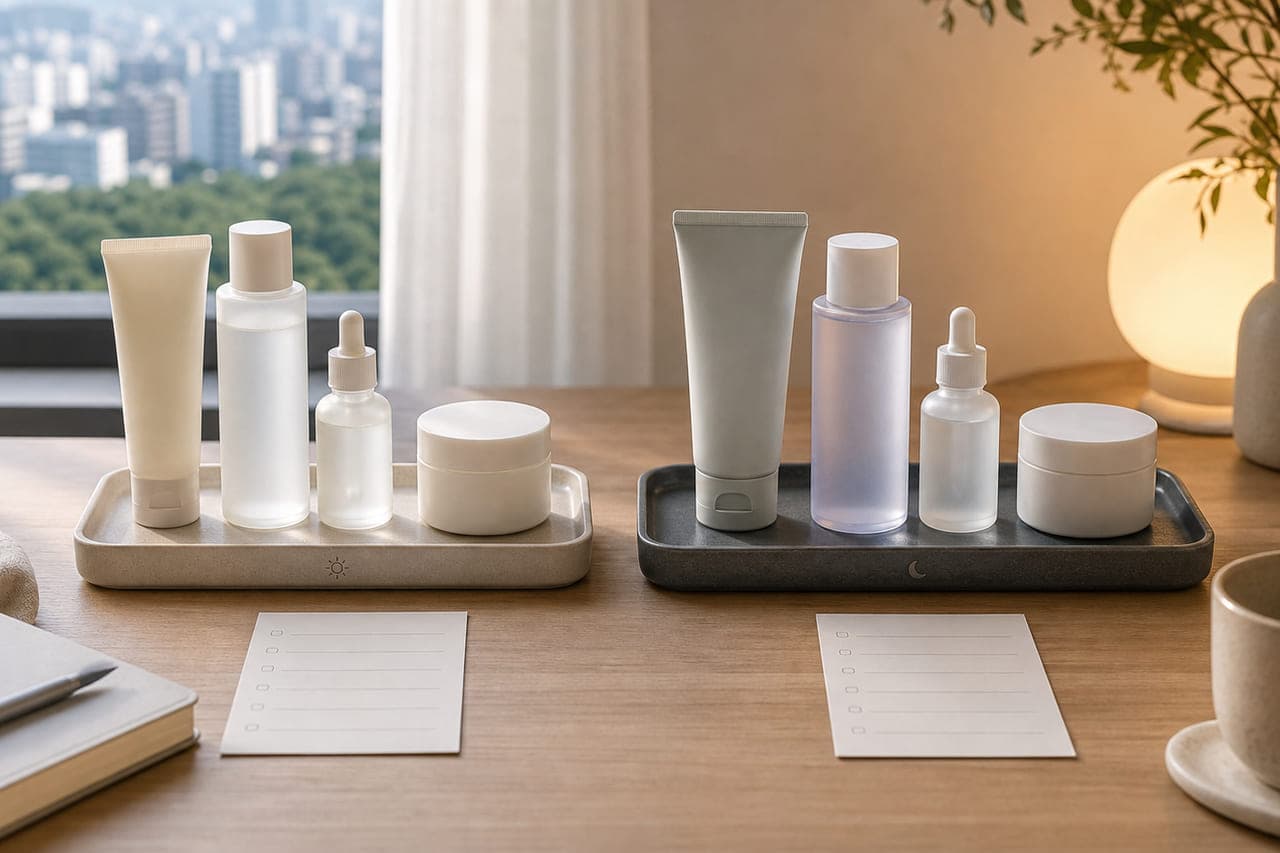
On this page
- Answer in brief
- Choose the final-step job
- Compare with sunscreen
- Check fragrance preferences
- Avoid replacing every leave-on step
- Photograph texture clues
- Keep live details at the source
- Start with the moisturizer job
- Compare format, package, and use directions
- Check overlap before comparing featured ingredients
- Save a reorder-ready moisturizer record
- Run one final moisturizer comparison card
- Know when to leave the moisturizer aisle
- Decision asset
- Source prompts
- Source boundaries
- Current checks
- Sources
- Related search answers
- Quick answers
Choose the final-step job
Decide whether the routine needs a light gel cream, a regular cream, or a richer final comfort step.
Compare with sunscreen
Morning moisturizer decisions should account for how sunscreen will layer as the final step.
Check fragrance preferences
Use current labels and product pages to check fragrance cues when scent preferences matter.
Olive Young moisturizer aisle flow
Narrow the moisturizer aisle by routine job, format lane, exact source evidence, and practical travel handling.
| Research stage | Decision action | Evidence boundary |
|---|---|---|
| Missing job | Decide whether the routine needs a morning layer, night layer, one-product replacement, travel format, or no change. | A new texture, featured ingredient, ranking, or promotion does not prove a moisturizer gap. |
| Format lane | Compare gel, gel-cream, lotion, cream, balm-like, or sleeping-pack candidates inside the same use moment. | Format names do not guarantee richness, hydration, finish, barrier support, or individual comfort. |
| Evidence check | Capture exact name, size, version, directions, ingredient list, warnings, package, and current source for finalists. | Do not fill a formula or version conflict with an old review, another package, or a shelf description. |
| Travel decision | Choose buy, record for later, reorder online later, or skip after checking duplicates, leakage, size, and luggage needs. | Live value, price, promotion, tax handling, stock, and availability require current store or retailer verification. |
This is cosmetic education, not medical advice. Verify current label, formula, directions, seller, price, promotion, stock, store, and travel details before buying.
Avoid replacing every leave-on step
A moisturizer does not need to solve toner, serum, and mask roles at the same time.
Photograph texture clues
Capture package text and shelf context that describes gel, cream, balm, or lotion format for later comparison.
Keep live details at the source
Current price, stock, coupons, and set promotions should stay on the retailer page.
Start with the moisturizer job
Decide what the moisturizer must contribute before comparing jars, tubes, gels, lotions, and creams. The task may be a lighter morning layer, a more substantial night finish, a travel-friendly replacement, or a simple product that reduces routine overlap. Record the existing toner, essence, serum, sunscreen, and makeup layers because they change how much another moisturizer needs to do. A shelf label or featured ingredient should not create a new task. If the job cannot be described in one sentence, keep browsing as research rather than moving to a purchase decision.
Compare format, package, and use directions
Read the exact format name and current directions, then inspect the package mechanics. A jar, pump, tube, or refill format changes handling, travel, and the ability to control use, but none guarantees a particular finish or result. Match the full product name, size, variant, and market version. Check whether a tester represents the same version and follow store hygiene rules. Keep texture impressions separate from formula claims, and do not transfer directions from another moisturizer in the same brand line.
Check overlap before comparing featured ingredients
A moisturizer can overlap with a sleeping mask, emulsion, rich serum, or moisturizing sunscreen. Map each existing product by routine job and texture before adding the aisle candidate. Then review the full ingredient list rather than selecting from the front-label ingredient alone. The highlighted ingredient can guide questions but does not establish concentration, comfort, or performance. If two products appear to fill the same job, compare one exact candidate against the current product instead of expanding the shortlist across multiple categories.
Save a reorder-ready moisturizer record
Photograph the complete name, front and back package, size, ingredient panel when available, directions, and any version marker needed to identify the product later. Save the store and date separately from live price, stock, bundle, or promotion details. For travel, check closure, leakage risk, weight, and current carrier rules. Before an online reorder, match the saved record against a current official source and seller listing. A similar jar or translated name is not enough to confirm the same moisturizer.
Run one final moisturizer comparison card
Put no more than three exact candidates into a card with the same fields: intended routine job, texture category, current formula source, directions, size, package type, version cue, and unresolved question. Add the existing moisturizer as a baseline instead of comparing only new products against one another. Promotional gifts, shelf position, and live price can be dated in a separate column after identity is clear. Choose only when one candidate improves a defined routine decision; a card that still contains several unknown versions should end in research, not checkout.
Know when to leave the moisturizer aisle
Walk away when the exact version cannot be matched, the formula source conflicts with the package, the candidate duplicates an existing role, or the decision depends only on a highlighted ingredient. Leaving without a product is a valid outcome because it protects the shortlist from an uncertain substitute. Save the exact question that remains and the current sources already checked, then resolve it outside the aisle without time pressure. A future purchase can be reconsidered after the routine need, product identity, and current seller context are all independently clear. The pause is part of the decision process.
Source verification prompts
- Does the current official source still support the district role or destination used in the route?
- Have current store hours, closures, events, reservations, and transport details been checked separately?
- Does the plan leave enough time for label photos, receipts, luggage organization, and an unresolved-item list?
- Are price, stock, promotion, and tax-refund details being treated as live information?
- Has every must-visit claim been replaced with a decision based on the traveler's actual shopping mission?
Source boundaries
- District roles and routes are planning frameworks, not complete or live store directories.
- Store hours, events, reservations, transport, prices, stock, promotions, and tax-refund details can change.
- Official tourism and provider sources should be reopened for the exact travel date before relying on logistics.
- A place or service mention is not a quality ranking, availability promise, or medical recommendation.
Verify current details
- Verify exact product identity, size, directions, ingredient panel, and package version.
- Confirm current tester access, stock, price, promotion, return, and tax-refund details.
Continue this research path
Evidence trail
Sources
Continue the research path
Travel
Browse beauty travel guides
Continue with Seoul routes, booking, tax-refund, and packing guidance.
Scorecard
Score the shortlist
Compare role, texture, label details, seller checks, travel fit, and final decision.
Shortlist
Save a smaller shortlist
Keep product candidates and verification notes in this browser while comparing options.
Retailer check
Verify the retailer page
Use seller, label, version, shipping, and return checks before relying on a retailer listing.
Routine
Check routine fit
Map skin type, category, and routine role before adding another product step.
Quick answers
How should you narrow moisturizer choices at Olive Young?
Decide whether the routine needs a gel cream, lotion, regular cream, or richer final layer before comparing brands. Use testers only for limited texture observations, then verify the exact product label, package, directions, fragrance context, and current version before checkout.
Does a richer texture automatically make a moisturizer better?
No. Texture weight is a preference and routine-fit decision, not a universal quality ranking. Match the exact product and current label, then verify store-specific details without assuming price, stock, or promotions.
Which details need a current check for Olive Young moisturizer aisle?
Verify exact product identity, size, directions, ingredient panel, and package version. Confirm current tester access, stock, price, promotion, return, and tax-refund details.
What should you do next after researching Olive Young moisturizer aisle?
Name the missing final-step texture before entering the aisle. Compare candidates over the same underlying routine assumptions.
Related product profiles

R.E.D Blemish Clear Soothing Cream
Dr.GVerify the current Moisturizer identity, label, and source status before deciding.
Panthenol + Centella Asiatica
Water Bank Blue Hyaluronic Intensive Moisturizer
LaneigeVerify the current Moisturizer identity, label, and source status before deciding.
Blue Hyaluronic Acid + Squalane
Birch Moisturizing Sunscreen UVLock SPF45+ Broad Spectrum
Round LabVerify the current Sunscreen identity, label, and source status before deciding.
Birch Juice + Niacinamide
DIVE-IN Low Molecular Hyaluronic Acid Serum
TorridenVerify the current Serum identity, label, and source status before deciding.
Hyaluronic Acid + Panthenol