
Routine
Korean Cleanser Routine Map for a First Simple Routine
A practical guide to placing cleanser in a first simple routine without duplicating steps or relying on unverified product claims.
- Best for
- beginners building a small Korean beauty routine before purchasing optional layers
- Shopping context
- the routine must remain understandable with only essential daily steps and one optional addition at a time. The step’s job is to remove the day’s sunscreen, makeup, and surface residue without turning cleansing into several automatic steps.
Updated 2026-07-21 · 9 min read
Answer first
What should you decide first in Korean Cleanser Routine Map for a First Simple Routine?
A practical guide to placing cleanser in a first simple routine without duplicating steps or relying on unverified product claims. Start with the routine already in use, define one missing job, and verify the exact current label and directions before adding, removing, or moving a step.
Key takeaways
- Map the products already used before and after the cleanser step.
- Write the morning and night essentials already owned before adding this step.
- Prefer the option with the clearest role and directions, even when another option has more trending ingredients.
- Test one candidate at a time using the current label directions and record the result.
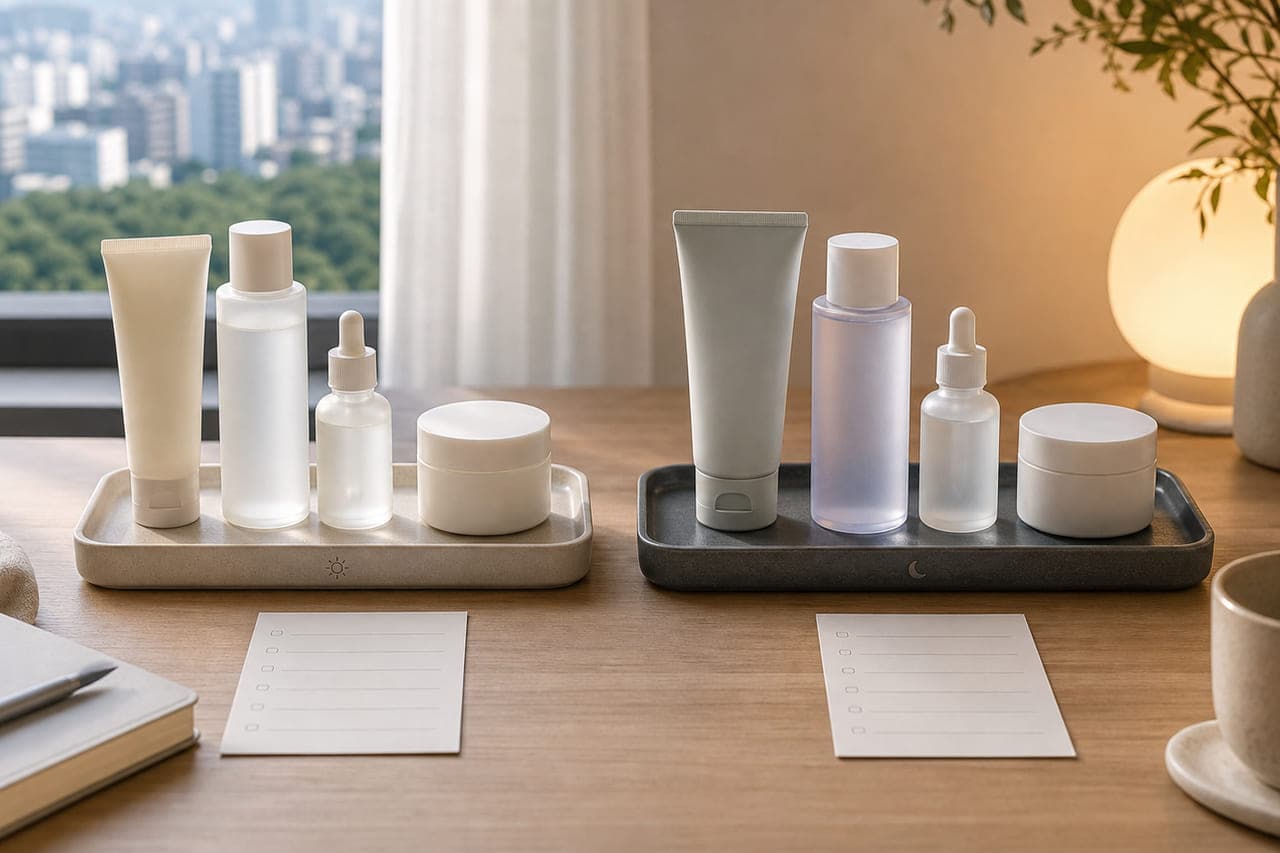
On this page
The short answer
Place cleanser only after defining its job: remove the day’s sunscreen, makeup, and surface residue without turning cleansing into several automatic steps. For a first simple routine, write the morning and night essentials already owned before adding this step. In “Korean Cleanser Routine Map for a First Simple Routine,” the guide is designed for beginners building a small korean beauty routine before purchasing optional layers. The practical context is the routine must remain understandable with only essential daily steps and one optional addition at a time. the step’s job is to remove the day’s sunscreen, makeup, and surface residue without turning cleansing into several automatic steps.. The goal is to leave with one clear next step, not a longer list of products, techniques, or places to research.
What should decide the answer
For “Korean Cleanser Routine Map for a First Simple Routine,” use these factors in order instead of starting with a viral product, a promotion, or a single featured ingredient. 1) Routine role: remove the day’s sunscreen, makeup, and surface residue without turning cleansing into several automatic steps. 2) Format choice: compare gel, foam, oil, and balm formats by what must be removed and how the product is rinsed. 3) Context constraint: the routine must remain understandable with only essential daily steps and one optional addition at a time. 4) Overlap check: watch for adding both an oil and a water-based cleanser when one well-chosen cleanse already handles the routine. 5) Application check: confirm whether the label is for dry or damp application, how it should be emulsified, and how thoroughly it should be rinsed. If two options still look equal, prefer the one with clearer current directions and fewer unresolved questions.
A practical workflow
Work through “Korean Cleanser Routine Map for a First Simple Routine” as a sequence rather than collecting disconnected tips. 1) Map the products already used before and after the cleanser step. 2) Write the morning and night essentials already owned before adding this step. 3) Prefer the option with the clearest role and directions, even when another option has more trending ingredients. 4) Test one candidate at a time using the current label directions and record the result. 5) The routine should still be easy to explain in one sentence after this step is added. Save the result in plain language so the next store visit, application attempt, or online check starts from a documented decision.
Korean Cleanser Routine Map for a First Simple Routine: decision checklist
Use this guide-specific checklist to turn the article into one documented next decision.
- Map the products already used before and after the cleanser step.
- Write the morning and night essentials already owned before adding this step.
- Prefer the option with the clearest role and directions, even when another option has more trending ingredients.
- Test one candidate at a time using the current label directions and record the result.
- The routine should still be easy to explain in one sentence after this step is added.
How to compare alternatives
Within the decision covered by “Korean Cleanser Routine Map for a First Simple Routine,” keep alternatives inside the same job before comparing them. Reuse the decision factors—Routine role: remove the day’s sunscreen, makeup, and surface residue without turning cleansing into several automatic steps., Format choice: compare gel, foam, oil, and balm formats by what must be removed and how the product is rinsed., Context constraint: the routine must remain understandable with only essential daily steps and one optional addition at a time., Overlap check: watch for adding both an oil and a water-based cleanser when one well-chosen cleanse already handles the routine.—and mark each field as confirmed, preference-dependent, or still unknown. A difference only matters when it changes comfort, application, routine fit, travel handling, or the ability to verify the current source.
Mistakes that weaken the decision
In “Korean Cleanser Routine Map for a First Simple Routine,” avoid shortcuts that make the page or purchase look more certain than the evidence allows. 1) Copying a long routine diagram and assuming every displayed category is mandatory. 2) Treating cleanser as mandatory when the rest of the routine already covers the same job. 3) Comparing brand popularity before compare gel, foam, oil, and balm formats by what must be removed and how the product is rinsed. 4) Assuming saved directions still match the current package or market version. Treat an unanswered question as a reason to pause, not as permission to fill the gap with assumptions.
Build a routine-change record
For this routine-change record, the working answer to “Korean Cleanser Routine Map for a First Simple Routine” is: Place cleanser only after defining its job: remove the day’s sunscreen, makeup, and surface residue without turning cleansing into several automatic steps. For a first simple routine, write the morning and night essentials already owned before adding this step. This record is intended for beginners building a small Korean beauty routine before purchasing optional layers. In the context “the routine must remain understandable with only essential daily steps and one optional addition at a time. The step’s job is to remove the day’s sunscreen, makeup, and surface residue without turning cleansing into several automatic steps,” compare “Routine role: remove the day’s sunscreen, makeup, and surface residue without turning cleansing into several automatic steps” with “Format choice: compare gel, foam, oil, and balm formats by what must be removed and how the product is rinsed” and mark each field as confirmed, preference-dependent, or unresolved. Connect “Context constraint: the routine must remain understandable with only essential daily steps and one optional addition at a time” to the action “Map the products already used before and after the cleanser step” only when the evidence supports both. Treat “Copying a long routine diagram and assuming every displayed category is mandatory” as a stop condition while “Overlap check: watch for adding both an oil and a water-based cleanser when one well-chosen cleanse already handles the routine” remains unclear, and return to “Map the products already used before and after the cleanser step” before proceeding. Before closing the record, answer “Does the current label describe the cleanser role and application method clearly” within the boundary “Texture and comfort are preference observations; they are not guaranteed outcomes for every person” and attach the source that controls “Routine role: remove the day’s sunscreen, makeup, and surface residue without turning cleansing into several automatic steps” for beginners building a small Korean beauty routine before purchasing optional layers. For a useful handoff, pair “Which existing product would this step replace, support, or duplicate” with “Write the morning and night essentials already owned before adding this step” while preserving “Format choice: compare gel, foam, oil, and balm formats by what must be removed and how the product is rinsed” for beginners building a small Korean beauty routine before purchasing optional layers, so the next reader can see why the option was used, compared later, or skipped. When the record is reopened, answer “Does the format remain practical under the the routine must remain understandable with only essential daily steps and one optional addition at a time” before repeating “Treating cleanser as mandatory when the rest of the routine already covers the same job,” and compare the new evidence with this page-specific scope: “A practical guide to placing cleanser in a first simple routine without duplicating steps or relying on unverified product claims.”
Verification and next step
Before acting on “Korean Cleanser Routine Map for a First Simple Routine,” run a final source pass. 1) Does the current label describe the cleanser role and application method clearly? 2) Which existing product would this step replace, support, or duplicate? 3) Does the format remain practical under the the routine must remain understandable with only essential daily steps and one optional addition at a time? 4) Are package version, ingredient list, and directions current for the market being purchased? 5) Can the final routine be described without relying on a promotional or popularity claim? The evidence boundary for this guide is: 1) Texture and comfort are preference observations; they are not guaranteed outcomes for every person. 2) Ingredient names do not establish the performance of a complete formula or replace current label directions. 3) This guide is educational cosmetic shopping support and does not diagnose or treat a skin condition. 4) Current brand labels and retailer terms take precedence over saved notes. When a current label, provider page, retailer listing, or official travel source disagrees with saved notes, use the current source and update the notes. Record the source, access date, exact product or provider, and unresolved field so the decision can be audited later.
Common mistakes to avoid
- Copying a long routine diagram and assuming every displayed category is mandatory.
- Treating cleanser as mandatory when the rest of the routine already covers the same job.
- Comparing brand popularity before compare gel, foam, oil, and balm formats by what must be removed and how the product is rinsed.
- Assuming saved directions still match the current package or market version.
Source verification prompts
- Does the current label describe the cleanser role and application method clearly?
- Which existing product would this step replace, support, or duplicate?
- Does the format remain practical under the the routine must remain understandable with only essential daily steps and one optional addition at a time?
- Are package version, ingredient list, and directions current for the market being purchased?
- Can the final routine be described without relying on a promotional or popularity claim?
Source boundaries
- Texture and comfort are preference observations; they are not guaranteed outcomes for every person.
- Ingredient names do not establish the performance of a complete formula or replace current label directions.
- This guide is educational cosmetic shopping support and does not diagnose or treat a skin condition.
- Current brand labels and retailer terms take precedence over saved notes.
Evidence trail
Sources
- U.S. FDA cosmetics labeling resources
government
- U.S. FDA cosmetic ingredients overview
government
Continue the research path
Routines
Browse routine guides
Continue with step order, weather, travel, and makeup-prep routine maps.
Scorecard
Score the shortlist
Compare role, texture, label details, seller checks, travel fit, and final decision.
Shortlist
Save a smaller shortlist
Keep product candidates and verification notes in this browser while comparing options.
Retailer check
Verify the retailer page
Use seller, label, version, shipping, and return checks before relying on a retailer listing.
Routine
Check routine fit
Map skin type, category, and routine role before adding another product step.
Quick answers
What should you decide first in Korean Cleanser Routine Map for a First Simple Routine?
A practical guide to placing cleanser in a first simple routine without duplicating steps or relying on unverified product claims. Start with the routine already in use, define one missing job, and verify the exact current label and directions before adding, removing, or moving a step.
What is the quickest way to use Korean Cleanser Routine Map for a First Simple Routine?
Place cleanser only after defining its job: remove the day’s sunscreen, makeup, and surface residue without turning cleansing into several automatic steps. For a first simple routine, write the morning and night essentials already owned before adding this step. Start with the four decision factors, complete the workflow once, and keep unresolved source details in a compare-later note.
Does Korean Cleanser Routine Map for a First Simple Routine provide live prices, rankings, or availability?
No. It does not infer prices, ratings, review counts, stock, promotions, certifications, or availability. Check current official and retailer sources before acting.
Related product profiles
Low pH Good Morning Gel Cleanser
COSRXVerify the current Cleanser identity, label, and source status before deciding.
Tea Tree Leaf Oil + Betaine Salicylate
Madagascar Centella Light Cleansing Oil
SKIN1004Verify the current Cleanser identity, label, and source status before deciding.
Centella Asiatica Extract + Sunflower Seed Oil
1025 Dokdo Cleanser
Round LabVerify the current Cleanser identity, label, and source status before deciding.
Deep Sea Water + Panthenol